თანამედროვე და, მით უმეტეს, მომავლის „ჭკვიანი ავტომობილის“ ტექნიკური სისტემის მართვა წარმოუდგენელია მისი შემადგენელი მექანიზმებისა და მოწყობილობების მუშაობის მუდმივი (თვით)დიაგნოსტიკის გარეშე. ეს აუცილებელია, რათა მართვის სისტემამ დროულად მოახდინოს რეაგირება სისტემაში მომხდარ არასტანდარტულ მოვლენებზე და ეცადოს, თავად აღმოფხვრას იგი; ან ოპერატიულად გააფრთხილოს მძღოლი უწესივრობების შესახებ; ან (უკიდურეს შემთხვევაში) დაიმახსოვროს ისინი, რათა მოთხოვნისთანავე მიაწოდოს მათ შესახებ ინფორმაცია სერვისის თანამშრომელს (ან მძღოლს).
არსებობენ ავტომობილები, რომლებიც ხანდახან დროს უსწრებენ: ტექნოლოგიით, ვიზუალით თუ ა.შ. უშუალოდ კი ეს ერთგვარი "მუშტაიდის საბავშვო მანქანა" სინამდვილეში 1958 წლის Sir Vival-ია. რომელიც ვოლტერ ჯერომის შთაგონებთი მისია იყო შეექმნა მსოფლიოში ყველაზე დაცული ავტომობილი. პროექტი 10 წელი გაგრძელდა. საბოლოო ჯამში, მას მართალია დასახული მიზანი ბოლომდე ვერ გამოუვიდა მაგრამ მისმა ქმნილებამ მსოფლოში ყველაზე უცნაური ავტომობილის ტიტული მაინც დაიმსახურა. რეალურად, იგი ერთ-ერთი პირველი ავტომობილია 1957 წლის Aurora-სთან ერთად რომელიც ექსპერიმენტალურ უსაფრთხო ავტომობილად შეიქმნა.
საავტომობილო ტრანსპორტში დღეისთვის გამოყენებულია ნავთობური წარმოშობის თხევად საწვავზე (ან აირად საწვავზე) მომუშავე შიგაწვის ძრავები. აღნიშნული ენერგეტიკული დანადგარის დანიშნულებაა ნავთობური წარმოშობის საწვავის წვის შედეგად მიღებული ქიმიური ენერგია გარდაქმნას მექანიკურ ენერგიად.
თუკი გნებავთ შექმნათ მაღალი სიძლიერის მქონე 4 ტაქტიანი (Stroke) ძრავა, არსებობს რამოდენიმე მეთოდი მის მისაღწევად.
პირველი: გავზარდოთ ტაქტი.
მეორე: დავაყენოთ ტურბინა/სუპერჩარჯერი.
მესამე და ბოლო: შევცვალოთ ბენზინი სხვა უფრო ენერგეტიკული საწვავით.
ხოლო რაც შეეხება Top fuel დრაგსტერებს, სამივეს ერთიანად აკეთებენ.
If you know anything about the crew at Lethal Performance, it’s that they are not shy about tearing into new Ford project vehicles. What is stock in South Florida does not stay stock in South Florida for long. While the Team Lethal 2015 Mustang got held up at the Ford plant, the delay has not dampened the excitement for this project one bit.
There will be no mistaking the Lethal Performance 2015 Mustang. If you aren’t sure, that blue wrap and signature skull and crossbones logo will confirm it for you. In the near future this car will have plenty of performance to back up its looks.
“This new Mustang is simply awesome. In my opinion it is the best-looking Mustang so far. The ride quality, interior, and features are right there at the top as well,” Jared Rosen said. “I definitely believe that this car will reignite the aftermarket and you can definitely see that from the huge presence the S550 Mustang had at SEMA this year.”
We’d agree wholeheartedly with Jared’s estimation, and we can’t wait to see where Team Lethal takes its latest project from here. He just picked the car up last week from Philip Weikert ofWeikert Ford—his dealer of choice—in Lake Wales, Florida.
“We couldn’t have found a better person to deal with and refer all of our customers to him to purchase their cars because we know he will treat our customers right,” Jared enthused.
Out back the Lethal Performance Mustang will receive a Magnaflow cat-back exhaust and a set of halfshafts from The Driveshaft Shop.
As you can already see, they have drastically amped up the car’s looks with a sick, Lethal-logo’d wrap which sets it apart from the crowd. However, that is just the beginning. Lethal plans to put a little performance distance between this car and your average S550 as well.
“The immediate goals for the car are to start with the standard bolt-ons such as a JLTIntake, a custom-tunedSCT X4 by Lund Racing, Eibach Pro-Kit springs, an Anchor Room complete tint kit, a Lethal Performance resonator-delete kit and maybe a little laughing gas from Nitrous Express; Pretty much what most new Mustang owners will do to their car shortly after purchasing it,” Jared explained.
Its first mod was obviously this striking wrap job, but look for the Lethal S550 to receive a host of suspension, engine, and drivetrain upgrades. You can watch the progression documented right here on SVTP.
If you haven’t already figured out where you’ll be able to learn all about the development of this project, we’ll clue you in. That would be right here on SVTP. We will cover the car’s genesis from stock S550 to performance powerhouse. From start to finish, we’ll be there, and it looks like it should be a lot of fun.
We will follow the progression of its Coyote engine from stock to bolt-ons to a built engine boosted by a Whipple 2.9-liter supercharger.
Pretty cool, right? Well don’t think that Team Lethal will be all about eight-cylinder action. The company has already been pushing into the EcoBoost world with its Focus ST project—Squirt. Soon there will be another Gas Turbo Direct Injection project car in the Lethal stable, and we are looking forward to covering that one too.
“We will definitely be getting into the Ecoboost market. In fact our 2015 EcoBoost Mustang is being built this week,” Jared said. “As soon as we receive it, we’ll be tearing into it just like we do with all of our other cars. We’re very excited about the EcoBoost platform as it’s a setup that benefits greatly from such simple mods like an intake, a tune, and exhaust.”
So strap in, 2015 Mustangs are about to get a Lethal injection of performance.
There are some things you should know about the Mercedes-Benz G63 AMG 6x6 before you watch it charge around Zandvoort like an angry, six-legged bull on roller skates. It weighs nearly 9000 lbs. Its three-axle setup is cribbed from the Austrian military's version of the G-wagen. Those 37-inch off-road tires have beadlocks and an onboard inflation/deflation system. If that doesn't sound like standard equipment on youraverage track-day car, it's not. The 6x6 is primarily about massive profits; secondarily, it's about off-road capability. It's about some other things, too, and about 40 feet down the tiny-font list is on-track capabilities. So this video might be the only time you'll ever see one of these things work out on a circuit like Zandvoort:
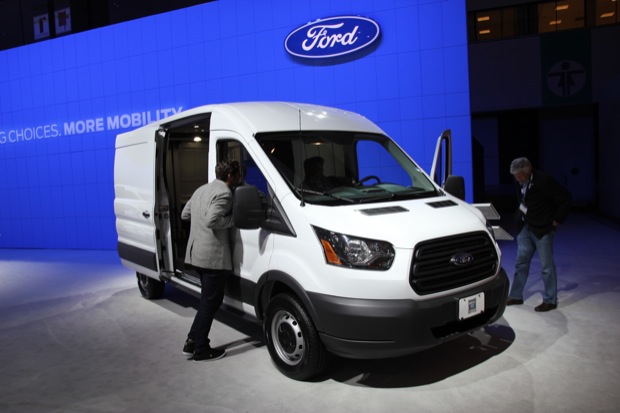
Forget everything you think you know about vans and then check out the all-new 2015 Ford Transit. The high-roof commercial van has enough headroom for people over 6 feet tall to stand upright in its specious cargo space.
The Transit is available in three roof heights and three body lengths from an 130-in. wheelbase up to a 148-in. long wheelbase with an extended body. Plus, it can also hold up to 487.3 cubic feet of cargo.
The base van starts at $29,565, the Wagon XL starts at $32,100 and the Wagon XLT starts at $33,600. Check out more photos of the Transit from this year’s Los Angeles Auto Show in the gallery below.
Mike Ryan's Freightliner semi is not only a fan favorite at Pikes Peak, it's also the star of its own series of Gymkhana shorts, in which Ryan demonstrates that he can drift pretty much anything. Further proving this point is a new promo video from data-storage company EMC, which hired Ryan to drift a house-sized mining truck in a demonstration of "scale and agility" (the company's ad tagline). This is what 200 tons of oppo looks like:
The official numbers were announced and the 2015 Ford F-150 gets the highest EPA-estimated fuel economy ratings of any full-size gasoline pickup on the market.
According to Ford, “When equipped with available 2.7-liter EcoBoost engine, new F-150 4×2 has EPA-estimated 19 mpg City, 26 mpg Highway and 22 mpg Combined fuel economy ratings.”
The “2015 F-150 can tow as much as 1,110 pounds more, haul as much as 530 pounds more, has a 5 percent to 16 percent better power-to-weight ratio and new F-150 EPA fuel economy ratings are 5 to 29 percent better than current models, depending on engine.”
“Ford advances to the next level in providing customers with more fuel-efficient vehicles, as the new 2015 F-150 lineup includes the highest EPA-estimated fuel economy ratings of any gasoline-powered full-size pickup sold in America.”
Here’s a chart that compares the 2015 2.7-liter EcoBoost 4×2 F-150 to the 2008 4.6-liter V8 4×2 F-150, and to its current major competitors provided by Ford below:
The all-new standard 3.5-liter Ti-VCT V6 offers performance customers expect from a full-size pickup truck, while offering unsurpassed EPA-estimated ratings of 18 mpg City, 25 mpg Highway and 20 mpg Combined for 4×2 models.
The 3.5-liter Ti-VCT V6 can tow an unsurpassed 7,600 pounds among light-duty trucks with standard V6 engines. The chart below provides details compared with the 2008 4.2-liter V6 4×2 F-150 and current major competitors:
The 5.0-liter Ti-VCT V8 provides customers with robust capability for frequent towing and hauling with a best-in-class maximum payload of 3,300 pounds and maximum tow rating of 11,100 pounds, which is an improvement of up to 3,900 pounds over the 2008 4.6-liter V8 F-150.
In the 4×2 configuration, the 5.0-liter has EPA-estimated fuel economy ratings of 15 mpg City, 22 mpg Highway and 18 mpg Combined. The chart below provides details compared with the 2008 4.6-liter V8 4×2 F-150 and current major competitors:
The available 3.5-liter V6 EcoBoost engine provides customers a strong combination of gas fuel economy and capability, with best-in-class 12,200 pounds of maximum towing and EPA-estimated ratings of 17 mpg City, 24 mpg Highway and 20 mpg Combined for 4×2 models. The chart below provides details compared with the 2008 5.4-liter 4×2 F-150 and current major competitors:
Equipped with 2.7-liter EcoBoost, the all-new F-150 is a better value than even diesel-powered pickups. For instance, the $495 option on the Ford is significantly less than the $4,470 3.0-liter Ram EcoDiesel option.
In addition, with diesel prices currently 76 cents per gallon more *6 at the pump, each 3.0-liter Ram EcoDiesel fill-up costs over $24 more than the new 2.7-liter F-150 *7. That means at today’s fuel prices Ram EcoDiesel owners are not able to offset the additional cost of their EcoDiesel engines with fuel savings *8.
New F-150 Lineup EPA-Estimated Fuel Economy Ratings
*1 Highest EPA-estimated fuel economy ratings of any gasoline-powered full-size pickup truck in America
*2 Unsurpassed EPA-estimated City and Highway ratings for light-duty 4×2 V6 pickup trucks
*3 Unsurpassed standard V6 engine maximum towing rating
*4 Best-in-class light-duty pickup truck maximum payload rating
*5 Best-in-class light-duty pickup truck maximum towing rating
*6 AAA Fuel Gauge Report fuel economy figures as of Nov. 21, 2014 – $2.84 regular gasoline, $3.60 diesel price
*7 32 gallon fuel tank
AAA fuel economy figures
*8 Based on EPA estimated combined fuel economy ratings of 2.7 liter EcoBoost 4×2 (22 mpg) vs. Ram EcoDiesel (23 mpg)
Cadillac chief marketing officer Uwe Ellinghaus is an energetic guy—the kind who taps the tabletop for emphasis in conversation—and he doesn’t mince words. We sat down with the man at the L.A. show and got his lively, spirited take on Cadillac’s plans to match the German marques’ sales volumes—with new small sedans, more crossovers, and, yes, a passionless alphanumeric naming convention—as well as the importance of the high-performance V line and how Cadillac can succeed against what he calls “cold, soulless, sterile” competition.
RS: How much of your strategy is focused on the V series of high-performance Cadillacs? UE: I’m of the opinion that, to a certain extent, V could really create a halo effect for the brand, because it shows our engineering capabilities better than any other car. [Those cars] cannot just rival Germany’s best, they will simply beat them, and they’ve already started doing that. These cars show how serious we are in transforming the brand, and that we are really serious when we say we build the cars that the German competitors no longer build. Not that they have unlearned the capabilities, but their volume aspirations are such that they can no longer afford to build the driver’s cars that are so nimble, quick, and fun as theATSandCTS.
What about the competition’s performance cars?
I really think we have a unique advantage [over M, AMG, and Audi RS] to build an alternative for high-performance drivers who pay more consideration to the design of the car. We want to be a little bolder than the Germans, we want to be a little more unapologetic than they can be. The CTS-V, believe it or not, has significantly younger and far wealthier customers than the [regular] CTS. Wealthy you would expect, given the price tag, younger you probably wouldn’t because of the price tag. This is a clientele who so far do not really fully get behind Cadillac, because they still have a little bit of the legacy of a grandfather’s car.
So you’re totally abandoning the old luxury ideal?
Yes. Absolutely. Completely. There was no way forward with the positioning that Cadillac had, because nobody wants a couch potato [car] any longer. Everybody wants good-looking and good-driving cars that have a certain responsiveness, and that aren’t arousing the sensation that you are sitting on a cushion.
There is no denying Cadillac needed to change, and I think this territory that the Germans left and we are just about to conquer is very promising because of the ubiquity of the Germans in suburbia. And I think the more cars they sell, the more people will think twice if they want the same brand that a third of the neighborhood already has. That’s why I think the best time for Cadillac is yet to come.
But we also learned on the sales front that our cars need to earn their way in. Because we haven’t made performance-oriented cars in the past, they are smaller than Cadillacs used to be, they have this new design line that is still distinctive, but is no longer as bulky or massive, people need to get their heads around it, and see that this [Ellinghaus points at the newly unveiled ATS-V nearby] is the new Cadillac.
What about the Escalade?
The Escalade is a terrific car, and I love it to pieces. It is an icon. But it’s not the pinnacle of Cadillac. Yes, in terms of the price point, but not in terms of image, the car that people aspire to. It is simply a little too polarizing to do this job. You either love SUVs or you hate SUVs. So I think from a product point of view, we need nothing more than a top-of-the-range sedan to show that our aspirations are not ending with the CTS here. And of course the CT6 that we already announced will do this job. SUVs resonate more naturally with the brand perception of Cadillac, whereas people still need to understand that when it comes to sedans, [there is a] new Cadillac. It takes time.
What makes the CT6 the flagship for Cadillac?
Dimensionally, it’s a significantly bigger car than the CTS, but the great thing about it is that due to lightweight technologies that our engineers use, the weight of this car is about the same weight as a CTS. Just imagine a car that has the driving characteristic of a 5 Series but the dimensions of a 7 Series. That is what the CT6 will be.
Who is your ideal Cadillac customer?
I don’t care. I want the brand to appeal to everybody who likes the values, appreciates the products, and has the means to buy them. You do not gain appreciation by overtly signaling who you appeal to. So I absolutely struggle with any segmentation of our customers, saying to me “your ideal customer is Mr. X, 35 years old, living there, having this hobby and this job.” Forget it. You simply need to like it, and of course in luxury you need to have the financial means to buy it.
I also don’t buy that younger customers are by definition better than older customers. Because age and wealth correlate highly—too bad for us younger people. And I want to appeal to young customers, but I don’t want to lose our old customers. I have no issue with the average age of an XTS customer because they stay healthy, they have the means, and they keep buying cars. And it makes money! So who am I to say, “no, we need to focus on a certain target customer”?
How do you change Cadillac significantly without alienating legacy customers?
We do alienate some customers. But to a certain extent you cannot have it all. And we must simply accept that we are currently in a situation—and it explains our sales results in the U.S.—that we lose our previous customers because they, to a certain extent, wonder why Cadillac has changed direction. And as much as they like the cars they are driving, they realize how different the new cars are.
And if you take the CTS as an example, not all but some [previous CTS buyers] cannot make the price walk to the new CTS, which is about $8000 more. But do we want to be a luxury brand at eye-level with BMW, Mercedes, and Audi? If so, we simply need to accept that we will lose customers on our way. Once we conquer more customers who like the new Cadillac, who cares about those that have left the brand? I am very optimistic that, over time, people will get their heads around that this is the new Cadillac, not just the cold, soulless, sterile German perfection.
You’ve said before that you want Cadillac to be proudly American, yet you were not a fan of how the controversial “Poolside” commercial portrayed that identity. [Note: While this commercial aired after Ellinghaus took over as CMO, the decision to run it predated him.] How do you emphasize Cadillac’s American roots without rehashing “Poolside”?
“Poolside” will not see a repetition, for sure. We will not poke at other nations. That’s not the way forward in building a global brand. What I do want to keep, though, is the point of view. Whether you liked “Poolside” or not, it had a point of view. I want distinctive communication. I do not want car porn. I do not want to just show beautiful product shots of cars. I want to capture people’s imaginations. I always say, I want to build the first luxury brand that just happens to sell cars. Luxury brands don’t sell products, they sell dreams.
How will I deal with the Americana? I will not use the words “American Luxury” anymore. What is the difference to European luxury? It’s not meaningful, and if you need to say that you are luxury, you are not luxury. Only the worst real-estate people that need to get rid of totally shabby rental flats put signs out that say “luxury rental.” That’s about where luxury ended as a word.
What I think is universal in its appeal is the American spirit. This optimism. This belief that the future is better than the past. And that has appeal in China as well as in Europe. So we will have American backdrops that are recognizable as American in our communications, but we will avoid clichés. So no Route 66. Don’t expect an Empire State Building.
Yes, I know, I know, and everybody is accusing me of lip service when I say we are not German and that’s a good thing, and how I want to reinforce the Americana. But honestly it is not [lip service]. My issue is that we need to give our cars proper mental places in our own hierarchy and across the competition. And ATS, CTS, XTS, you need to be in the car industry to figure out where they are size-wise. When you say A4, A6, A8, 3 Series, 5 Series, 7 Series, you immediately realize. My argument is simple: BMW, Audi, Mercedes have a clearer nomenclature than we do. Many others as well. We need to play within the laws of the brands that make 80 percent of the volume of luxury cars. And our customers come to our showrooms and—whether we like it or not—they say stupid things like, “Cadillac, what’s your 5 Series? Cadillac, what’s your A4?” Hierarchy is not a German invention, they just adhere better to it.
But you have such a rich history of evocative names—Seville, DeVille, Eldorado...
Yes, DeVille was far more exciting, Eldorado was far more exciting. But I don’t want nameplates to be exciting, because I want to build a Cadillac brand. The brand must be the driver of passion, and the cars and nomenclature should just sort themselves out. So I take all the blame—oh boy, and I have tons of it, on my desk, on all the blogs—and I fully accept it, but there’s no way around it. Don’t forget, we will expand our product portfolio, and if we keep the three letters, we will definitely confuse customers.
So I know [the nomenclature] sounds German, although it isn’t—it’s just logical and hierarchical. People outside of car nuts and automotive journalists have a hard time memorizing all the names Cadillac used in the past anyway. They are no longer meaningful. Let’s face it, those cars weren’t anywhere near as good as today’s cars are, so those names are not arousing for those that still remember them.
Among luxury brands, who else is doing the kind of branding you want for Cadillac?
I will deliberately shy away from the example that everybody gives in this case: “Everybody wants to be Apple.” No. We want to remain Cadillac. But Apple teaches us one thing: The convergence of design and technology. And that’s something that’s highly relevant for Cadillac. Expect our future appearance to be, let’s say, more human than the Germans are—light, a look and feel that is definitely contemporary American. There is a cool America out there, and this is what I want.
Kia has revealed their new Kia Sorento Wolverine, a car based on Wolverine from the X-Menmovies (via Motorward). The car is a promotional device intended to drum up hype for the Blu-ray release of X-Men: Days of Future Past.
The Kia Sorento Wolverine is based on the 2016 model Sorento, with a black paint job, and Wolverine’s signature claws in the front and back.
With Wolverine actor Hugh Jackman being Australian, Kia will be showing the car off at the Australian Open, which they are the primary sponsor of.
Ford finally unveiled its new Mustang Shelby GT350 track scalpel this week, and the car is packed with tons of interesting details—but none as tantalizing as the Blue Oval’s first-ever flat-plane-crankshaft engine, a 5.2-liter screamer of a V-8.
We still don’t know some of the most important details, like exact output or how much the car will cost, nor do we even have photos of the engine or its internals. But that doesn’t mean we weren’t able to squeeze some of the Ford personnel involved with the GT350 for more information about the heart that beats under this monster’s hood.
1. It’s Ford’s most powerful naturally aspirated engine ever—and revs to 8000-plus-rpm.
Ford has been all about forced induction lately, with turbocharged EcoBoosts finding their way into everything from the tiny Fiesta to the massive 2015 F-150. For the GT350, however, Ford skipped the turbos—and the supercharger of the GT500—and opted for the low inertia and high rpm of a naturally aspirated mill. To this formula, it added a flat-plane crankshaft, which optimizes breathing and evenly spaces exhaust pulses in both cylinder banks by having the crank pins attached at 180-degree intervals. The upshot is more power and the ability to rev to the high heavens. With more than 500 horses and maximum torque somewhere north of 400 lb-ft and an indicated redline of a staggering 8200 rpm, it’s certainly a Ford engine unlike any other.
2. Coyote foundation, but not a parts-bin build.
The engine may have been birthed from the same architecture as the 435-hp Coyote 5.0 from the new Mustang GT, but nearly everything has been replaced. The new 5.2-liter engine has its own block casting, new crankshaft (duh), new pistons, new connecting rods, new heads, new cams, new intake, new oil pan, and a new harmonic balancer to smooth out the flat-plane’s inherently tricky vibrations. The only carry-overs from the Coyote 5.0 are hangers-on such as the alternator and starter and a few small components in the valvetrain. The 5.2 also utilizes plasma-transferred wire-arc cylinder coatings like the outgoing GT500.
3. It’s lighter than the Coyote 5.0-liter.
Ford’s folks steadfastly refused to divulge concrete numbers, but performance division chief engineer Kerry Baldori said the 5.2 “definitely has a weight advantage” over the 5.0. We already love the moves of the latest10Best-winning GT, so we’re completely stoked to find out what pulling a bit of weight off the nose—combined with the GT350’s myriad other chassis tweaks—does to a V-8 Mustang. Also saving weight: There won’t be a plastic engine cover.
4. It’ll kind of bolt right in to your 2015 Mustang GT.
Since it’s based on 5.0 architecture, the new engine—which was known as Voodoo in development—shouldbolt right in to the Mustang GT. You’ll have to swap the exhaust for the one meant for the flat-crank V-8, but otherwise all the necessary holes should line up. There’s no official word on whether a crate Voodoo will make its way to the Ford Racing catalog, although Baldori called it “a great opportunity.” Read what you will into that.
5. Finally, the flat-crank V-8 sounds like this (the good stuff comes in about 57 seconds in)
Since the launch of the 2015 Mustang, we have already seen an astounding number of variations on the S550 theme. From a wide variety of custom Mustang at The SEMA Show to the recent unveiling of the Shelby GT350, these cars have made it clear that the Mustang is still the car to customize. However, the wildest variation yet is born of the partnership of Henrik Fisker and Galpin Autosports. It’s called theRocket.
The Rocket’s girthy body enhancements are crafted from hand-laid carbon fiber.
Henrik is the man behind Fisker Automotive, builders of the Fisker Karma, and Galpin Auto Sports and GFMI Metalcrafters brought his take on the new Mustang to life. It features a unique fascia, hood, fender flares, and rear spoiler—all made from carbon fiber! Its scoops and vents are designed to improve cooling and reduce lift, while its splitter and rear spoiler are there to add downforce at high speeds.
“Mustang has been my favorite car for almost my entire life. I had the pleasure of working with Ford’s development team for the last few years, and I think they absolutely nailed it. So of course, I wanted to do something really special when the new Mustang came out,” Galpin’s President, Beau Boeckmann, said. “When Henrik showed me his ideas, I got chills—it’s literally the most beautiful Mustang I have ever seen. Considering it’s our top product for customizing and performance at GAS, it is a natural fit for us to try to make the performance stand out as much as the design does. Doing this project with my dear friend Henrik—who I consider one of the greatest designers of all time—is simply a dream come true!”
The more pronounced wing on the trunk lid lays out a nice background for the Rocket emblem. Your author is really digging the carbon-fiber accents.
This car will also have the performance to back up its bold looks. A supercharged, 725-horsepower Coyote will launch the Rocket, and massive, 15-inch Brembo brakes will bring it in for a safe landing. The functional body work also serves to cool the rear brakes by ducting air from scoops on the fenders to the Brembos. In all, it looks to be a well-rounded package for someone that wants a unique Mustang.
Lots of red leather and carbon fiber on the inside give the Rocket’s cockpit the look of an exotic car.
“It’s a special moment when you get to work on a car like the Ford Mustang. This is a project born out of passion, it’s a dream come true, to have the opportunity to ‘touch’ a Mustang and apply my design ideas to it,” Henrik said. “I love the ’60s American muscle cars. They are more sculptured, with more radical proportions and bold details than European counterparts. My favorite Mustang is the 1968 Shelby GT500 that had this long hood and huge air intakes; it gave me butterflies the first time I saw it. We wanted to recreate that feeling with this car.”
“Ford’s engineers and Moray Callum’s design team did an amazing job with the new Mustang,” he added. “So good in fact, I think the design additions and power upgrades we have made to the car help it play in a higher league, against much more expensive supercars!”
The cars begin production next month, and they should be available in the first quarter of 2015.You will be able to order one of these low-volume creations right from Galpin Ford or via a selection of hand-picked dealers across the globe.
The Mod List
• Handmade carbon-fiber body constructed by GFMI Metalcrafters, Inc. • 725 hp V8 Engine • 15-inch Brembo Grand Turismo Brakes • Custom Silver Éminence Grise Body Color • 21-inch ADV.1 Wheels w/Pirelli P-Zero Tires • Front/Rear Fully-Adjustable Ind. Suspension • Hexagonal Carbon Fiber Grill • Integrated Rear Spoiler • Custom Sculptured Flared Fenders • Front Splitter • Enlarged Rear Diffuser • Polished Carbon Fiber Aero Skirts
The 2015 Chevrolet Colorado has already, single-handedly, brought the smallish-sized pickup truck segment back from the dead. The Tacoma and Frontier have been the sole holdouts in the segment for years, and they are creaking and groaning under the weight of carrying water for the entire US medium truck market.
And then, Chevy shows off a segment-busting diesel-powered concept. The Colorado ZR2 Concept pairs a storied offroad trim package with the new-to-the-US 2.8-liter four cylinder diesel, branded as a Duramax. Other tweaks are a 4-inch wider stance front and rear, a 2-inch lift, a revised front fascia that eliminates some overhang, and integral skid plates. The combination is good for increased approach and departure angles (30.7 and 22.7 degrees respectively), and upgraded offroading capabilities thanks in part to monotube King coilovers with remote fluid reservoirs and electronic-locking differentials front and rear.
Those are pretty much all the goodies you'd want to bolt onto a stock Colorado to hit the dirt anyhow. And it looks a lot more aggressive than the handsome stock truck. That revised front end, the fender flares, the bead-lock wheels, the front tow-hook … it all looks great.
And that Duramax is what makes it all work. In case you don't recall, the 2.8-liter four puts out 181 hp at 3400 RPM and 369-lb-ft of torque at 2000 RPM, thanks in part to a variable-geometry turbocharger. All of that rock-crawling torque is pushed through a 6-speed auto in this concept.
If Chevy actually builds the Duramax-powered Colorado ZR2 Concept, it'll be completely unique in the segment, and it should have diesel-heads and offroad enthusiasts foaming at the mouth.
If your reaction to the 2016 Ford Mustang Shelby GT350 unveiling this week included thoughts along the lines of, "Man, I cannot WAIT for the convertible," well, you will in fact be waiting a long time. Like, forever.
Unlike the GT500 that preceded it, don't look for Ford to pull the wraps off a ragtop at the Chicago Auto Show (where the GT500 verts usually made their debut). A convertible, we're told, was never in the product plan. And the reasoning is simple (and obvious): the GT350 is about maximum performance and carving up road circuits. Cutting the roof off would reduce stiffness so much, that the point of the GT350 would be negated. It's the same reason we didn't see a Z/28 convertible from Chevy.
That's not to say a max-perf convertible can't happen with the right chassis. For that, you need only look at the Corvette Z06, whose ragtop version is still a huge leap ahead of the old car. Frankly, I think GM should troll the universe and use a convertible automatic to set their undoubtedly fast Ring time, but I digress.
Also not in the cards for the GT350? An automatic—no surprise, as the GT500 never got one either. And sorry, Australia, while you guys are getting a right-hand-drive Mustang, the Shelby will only be built in a left-hand-drive configuration.
The best part of the GT350 story is that the car in LA isn't even the true Z/28 stalker. That'll be the still-behind-the-curtain GT350R (to put it in context, the R will be the Laguna Seca to the GT350's Boss 302), and it should be ultramega great. Look for that one—with better brakes, tweaked aero, stickier rubber, and more—in Detroit come January.
So yeah. This video...it's pretty great. The venue is Road Atlanta, where Chevy held the media launch for the 2015 Corvette Z06. As such, the track was full of Z06es doing Z06 things, namely moving with urgency and sounding the business. This week has been largely about the Shelby GT350 and how incredible its flat-plane 5.2L V8 sounds.
But let this serve as a reminder that the Corvette Z06's pushrod LT4 V8 gives it a run for its money in the audio department. This is ear sex writ large. Enjoy:
The Audi Prologue concept car is a big deal, literally and figuratively. The first vehicle produced under Mark Lichte's tenure as head designer, the Prologue is a concept, yes, but its name indicates that what you see here, you outght to get accustomed to. All of this is good news. The big luxury coupe is aimed directly at competitors like the drop-dead-gorgeous Mercedes-Benz CL and the BMW 6 Series.
How big is it? Imagine a really sexy A8, minus two doors—the Prologue is essentially as wide and long as the sedan, but the roofline is much lower than the A8's formal limousine profile. If you're rooting for this to get greelit for production, join the club. The concept car's power comes from a monster version of Audi's 4.0-liter twin-turbo V8, whose wick is dialed up to 605 hp and 516 lb-ft of torque (553 lb-ft with overboost), channeled through an 8-speed auto to all four wheels via quattro. Audi saus 0–60 takes just 3.7 ticks. All-wheel sterering is part of the package, as are giant carbon-ceramic brakes behind the 22-inch wheels—the front rotors are 20 inches in diameter and squeezed by six-piston calipers. The whole car weighs in at 4365 pounds.
There's no mistaking this for an Audi, mind you, but the changes pull the design language forward. The shield grille is shorter, wider and mounted lower, making the front end look immediately sportier. The Eurofighter-style winglets under the air intakes are a nice touch. Move to the car's rear and gaze at the 3/4 view, and longtime Audi aficionados will see an nod to the beloved urQuattro in the form of a soft interpretation of that car's signature box-flared haunches. Up front, Audi's matrixed laser headlamps cut through the darkness,
Inside, we get a high-tech instrument panel that offers the necessary concept-car glitz, yet also reeks of feasibility. The Audi Virtual Cockpit, debuting in the new TT, is obviously in place, but in lieu of physical controls, well, anywhere, the car is loaded with high-resolution, touch-sensitive displays on the dash face itself. The areas on either side of the wheel let the driver control the essentials like lighting and media. The area in front of the passenger seat also lets that person control entertainment features and perform tasks like entering navigation info, which can then be swiped, tablet style, to the driver.
Audi
In lieu of the usual centrally mounted MMI screen, an OLED touch-sensitive panel lives in the transmission tunnel. When not in use, Audi says it's essentially invisible. Some of the aforementioned gee-whiz stuff may sound somewhat familiar, because BMW took a similar approach with the cabin of its Future Luxury concept last year. Clearly, this is the direction in which the luxury automakers are headed.
If this is how Audi sends us into its take on our luxury-car future, well, all the better.
The reveal of an all-new subcompact crossover typically elicits reactions from us that border on comatose. We look up, shrug, and then pour a beer and fantasize about all the bolt-ons we want to buy for our track cars. Or that classic Ford Bronco we could totally bring back from the brink of death. To this bleak landscape comes Mazda, bursting in with its all-new CX-3, talking up a storm about driving pleasure and Jinba-Ittai at the 2014 L.A. auto show. Hold that beer a sec, will ya?
Miata fans will recognize the phrase, which in Japanese loosely translates to: “man, horse, one body.” Over the years, it has come to define Mazda’s philosophy for the MX-5 Miata and is a perfect distillation of the company’s efforts to entertain drivers. To Mazda, Jinba-Ittai represents the ideal mixture of handling, power, braking, and steering. No single element overpowers the other. They’re all balanced and easily exploited by the pilot, and the idea that Mazda even considered this when developing the CX-3 is cause for enthusiasts to stop and take notice.
It Looks Great
Sharing the attractive Kodo design language with the brand’s Mazda3, Mazda6, CX-5, and the upcoming Mazda2, the new SUV features a tight greenhouse perched atop flowing fender flares. In top-spec trims, the CX-3 wears 18-inch wheels that fill the cutouts nicely and impart an athletic stance. The front and rear end treatments are essentially scaled down versions of the CX-5’s. This is not a bad thing.
The passenger cabin is very similar to the 2016 Mazda 2’s, which should come as no surprise given that the two share a platform. In fact, the CX-3’s Italianate three-vent dashboard and neat center stack appear to be swiped directly from the 2. Style and substance abounds, with a high-resolution, seven-inch touchscreen center display, a McLaren-style three-pod gauge cluster, and an infotainment control knob that'd look at home in a BMW 7-series.
SKYACTIV-ate
Mazda’s full suite of Skyactiv engine, transmission, and chassis technologies is on display here. Essentially a strict weight-control regimen blended with efficient-but-powerful engines, the Skyactiv ethos is intended to keep fuel economy in check without murdering the driving experience. The wheelbase measures 101.2 inches, exactly the same as the 2016 Mazda 2. Other CX-3 dimensions are slightly bloated relative to the global Mazda2, including its 168.3-inch length (8.5 inches longer) to its 69.5-inch width (2.8 inches wider) to its 61.0-inch height (1.9 taller).
All US-market 2016 CX-3s will be powered by Mazda’s 2.0-liter Skyactiv four-cylinder paired with a six-speed automatic. Although we lament the unavailability of a manual transmission (Mazda is torturing us by having a global model with the stick on the show display), Mazda’s in-house automatic is among the better such gearboxes we’ve sampled. No further details have been provided for the CX-3’s engine, but the same unit produces 155 horsepower and 150 lb-ft of torque in the abundantly fun Mazda3, specifications we expect will carry over nearly—or totally—unchanged. If that’s the case, look out, as a2014 Mazda3 with the same powertrain that CAR and DRIVER tested hit 60 mph in 7.6 seconds.
Front-wheel drive is standard, and an all-wheel-drive system derived from the CX-5’s is optional. Choosing four driven wheels adds extra bracing for the body around the spare-tire well and behind the rear seats. On the safety front, Mazda’s i-Activsense bundle of technologies is promised; that means that blind-spot monitoring, lane-departure warning, rear cross-traffic alert, radar-based collision warning with automatic braking, and even adaptive cruise control should be offered on the CX-3.
Expect full specifications, features, and pricing to trickle out over the next several months as we approach the CX-3’s mid-2015 on-sale date. The most important missing detail, of course, is how the CX-3 lives up to its sporty promise. The most recent Mazdas are, frankly, a ball to drive, so we can't wait to get our hands on the CX-3.